
 Home
 Stoves


 Services

 Outdoor
 Contact Hot Box Stoves Dundee
 Service Areas
Stove Installation, Top Tips, Wood Burner Installation
Do You Need Planning Permission for a Wood Burning Stove in Dundee? 2026 Guide
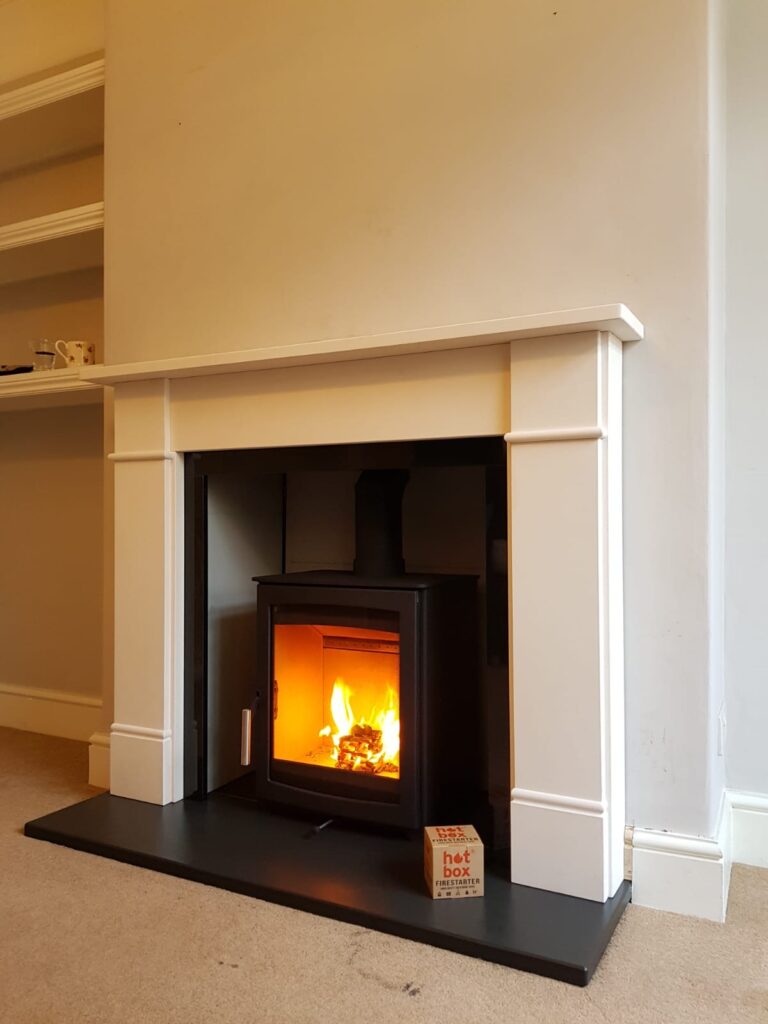
Sep
Thinking about installing a wood burning stove in Dundee?
Before choosing your stove, opening up the fireplace or planning a new flue, there is one particularly important local rule you need to understand: Dundee’s planning position is different from the generic advice you may have read online.
Do you need planning permission for a wood burner in Dundee?
Yes — where the installation involves a flue, duct or chimney associated with the wood-burning stove, Dundee City Council’s published guidance states that planning permission is required.
This is because Dundee is designated as an Air Quality Management Area (AQMA). This does not mean wood-burning stoves are banned; it means the installation needs to be planned correctly before work begins.
If you’re considering a log burner in Dundee, Broughty Ferry or elsewhere within the Dundee City Council area, this guide explains the main issues surrounding planning permission, Smoke Control Areas, Scottish Building Standards, building warrants, chimneys and flues.
Why are the planning rules different in Dundee?
The key reason is air quality.
Dundee is designated as an Air Quality Management Area. Dundee City Council’s Householder Development guidance specifically addresses biomass heating systems and wood-burning stoves.
The Council states that because Dundee is an AQMA, planning permission is required for any flue, duct or chimney associated with a biomass heating system, including a wood-burning stove.
That is important because you will often see general UK advice online suggesting that installing a stove or chimney flue is normally permitted development. That advice should not simply be applied to a property in Dundee.
Does this mean wood burning stoves are banned in Dundee?
No. Wood-burning stoves are not banned in Dundee.
A properly selected and correctly installed stove can still be installed, subject to the relevant planning, air-quality and Building Standards requirements.
A Dundee installation may involve consideration of:
Is Dundee a Smoke Control Area?
Dundee City Council states that most of the city is covered by Smoke Control Areas.
This is a separate issue from planning permission.
Smoke Control Areas regulate smoke emitted from chimneys and affect the appliance and fuel combinations that may legally be used.
| Requirement | What it deals with |
|---|---|
| Planning permission | The flue, duct or chimney and the development itself. |
| Smoke Control Area rules | The appliance, fuel and smoke emitted from the chimney. |
| Scottish Building Standards | Technical safety and performance of the installation. |
| Building warrant | Statutory approval for work which is classed as warrantable. |
| Listed Building Consent | Alterations that affect the character or fabric of a listed property. |
Can I burn wood in a Dundee Smoke Control Area?
Potentially, yes. If you intend to burn wood in a Smoke Control Area, the appliance needs to be legally suitable for that use and operated in accordance with the conditions applying to its exemption.
Do I need a building warrant for a wood burning stove in Dundee?
Not every stove installation automatically requires a building warrant.
In Scotland, the answer depends on the work being carried out as part of the installation.
Some solid-fuel installation work is exempt from the warrant process under Scottish building regulations, although it must still comply with the applicable Building Standards.
Other work can be warrantable. For example, HETAS guidance for installers operating in Scotland identifies installations involving a new flue-pipe and/or constructional hearth as examples where warrantable work can arise.
A HETAS certificate does not replace a Scottish building warrant.
HETAS confirms that Scotland does not operate the same Competent Person Scheme notification system used in England and Wales. If the work is warrantable, the appropriate Scottish warrant process still needs to be followed.
Which Building Standards apply in Scotland?
Wood-burning stove installations in Dundee need to meet the relevant requirements of the Building (Scotland) Regulations and the Scottish Government’s Building Standards guidance.
For work covered by the current standards, the April 2026 Domestic Technical Handbook applies to building warrants submitted on or after 6 April 2026 and to relevant work not requiring a warrant that starts from that date.
A compliant stove installation may need to address:
- Safe removal of combustion gases
- Correct chimney or flue design
- Appropriate flue sizing
- Flue terminal position
- Protection of combustible materials
- Hearth construction and dimensions
- Combustion air and ventilation
- Carbon monoxide detection
If you’re searching online, be careful with articles based on England’s Approved Document J. Dundee installations are governed by the Scottish system.
Can I have a wood burner if my Dundee home doesn’t have a chimney?
In many properties, yes.
A purpose-designed insulated twin-wall chimney system can often create a suitable flue route where there is no traditional masonry chimney.
This is precisely the type of Dundee installation where we recommend considering planning at the beginning rather than designing the system first and dealing with permission afterwards.
What if I already have a chimney?
Having an existing chimney can make an installation more straightforward, but it does not automatically mean the chimney is ready to accept a modern wood-burning stove.
The existing chimney may need to be assessed for its condition, dimensions, route and suitability for the proposed appliance.
Depending on the property, an installation might involve:
- A suitable chimney liner
- Stove pipe
- Register plate or closure system
- Chimney terminal
- Fireplace alterations
- A new or altered hearth
- Ventilation where required
What if my Dundee property is listed or in a conservation area?
Additional controls can apply to listed buildings and properties in conservation areas.
Listed Building Consent may be required where proposed alterations affect the special architectural or historic character of a listed building.
Particular care can be required where an installation affects:
- Historic fireplaces
- Original chimney breasts
- Stonework
- Historic chimney stacks
- External elevations
- Rooflines
A modern twin-wall flue can also be visually prominent, so selecting the right route and finish at the survey stage can make a significant difference.
Can you install a wood burner in a Dundee tenement?
Potentially, but a tenement installation can be considerably more involved than installing a stove in a detached or semi-detached house.
Considerations can include shared building fabric, chimney condition, multiple flues within the same chimney stack, separating floors and walls, access, roof works and the interests of other owners.
For that reason, we strongly recommend having the property surveyed before buying the stove.
Can you install a wood burner in a new-build home in Scotland?
Yes. Current Scottish Government guidance confirms that wood burners and other bioenergy heating systems can be installed in new homes and buildings.
Changes introduced from 1 January 2025 specifically allow bioenergy systems including wood burners under Scotland’s New Build Heat Standard.
Modern new-build properties do, however, require careful consideration of factors such as airtightness, ventilation, combustion air and chimney design.
Our Dundee wood burner checklist
Confirm the relevant local authority and planning position.
Most of Dundee is covered, so the appliance and fuel matter.
If you have one, establish whether it is suitable before choosing your stove.
If there is no chimney, establish the most suitable twin-wall route.
Do this before ordering or installing the chimney system.
The answer depends on exactly what work is proposed.
Match the appliance to the property, required heat output and Smoke Control requirements.
Why we recommend a survey before choosing your stove
A stove should not really be selected in isolation.
During a survey, the property can be assessed as a complete installation, including:
- Existing fireplace and chimney
- Potential flue routes
- Stove location
- Appropriate heat output
- Hearth requirements
- Distances from combustible materials
- Ventilation
- Smoke Control considerations
- Planning considerations
- Potential Building Standards requirements
Thinking about a wood burner in Dundee?
Don’t buy the stove first and investigate the installation afterwards. Tell us about your property and we’ll help you understand the stove, chimney and installation options available.
Get an Instant Installation Quote Contact Hot Box DundeeFrequently asked questions
Do wood burning stoves need planning permission in Dundee?
Dundee City Council states that because Dundee is an Air Quality Management Area, planning permission is required for any flue, duct or chimney associated with a biomass heating system, including a wood-burning stove.
Are wood burners banned in Dundee?
No. Wood-burning stoves are not banned in Dundee. The relevant planning, Smoke Control and Scottish Building Standards requirements still need to be followed.
Is Dundee a Smoke Control Area?
Dundee City Council states that most of the city is covered by Smoke Control Areas. The status of the individual property and the proposed appliance should therefore be checked.
Do I need a DEFRA-exempt stove in Dundee?
If you intend to burn wood in a Smoke Control Area, the stove needs to be legally exempt for the relevant use and operated in accordance with the applicable conditions. Appliance suitability should be checked before purchase.
Does a HETAS certificate replace a building warrant in Scotland?
No. HETAS specifically states that issuing a HETAS Certificate of Compliance does not constitute or replace completion of the Scottish building-warrant process where a warrant is required.
Can I have a wood burner if my Dundee house has no chimney?
Potentially, yes. Many properties can use a purpose-designed insulated twin-wall chimney system. The proposed route needs to be assessed against planning and Building Standards requirements.
Can I have a wood-burning stove in a Dundee new build?
Yes. Scottish Government guidance confirms that bioenergy systems including wood burners can currently be installed in new homes and buildings, subject to the relevant standards and installation requirements.
The bottom line
If you’re considering a wood-burning stove in Dundee, don’t rely on the generic statement that “log burners don’t normally need planning permission.”
Dundee City Council specifically states that planning permission is required for any flue, duct or chimney associated with a wood-burning stove because Dundee is an Air Quality Management Area.
Most of Dundee is also covered by Smoke Control Areas, and the installation must comply with the relevant Scottish Building Standards. Depending on the work involved, a building warrant may also be required.
None of this means you cannot have a stove. It simply means the installation should be designed correctly from the beginning.
Find out what a stove installation could cost
Use our Dundee instant quote tool and tell us whether you have an existing chimney, what type of property you own and where you’d like your stove installed.
Get My Free Instant Quote →Dundee City Council — Householder Development Guidance
Scottish Government — Domestic Technical Handbook, April 2026
Scottish Government — New Build Heat Standard
Updated September 2026. This article provides general information. Planning and Building Standards requirements can depend on the individual property and the exact work proposed. Formal requirements should be confirmed with the relevant authority where necessary.
