
 Home
Home Stoves

 Services

 Outdoor
 Contact
 Service Areas
Log Burners, Chimney Maintenance, Stove Installation, Top Tips, Wood Burner Installation
Log Burners Scotland
Sep
Log Burners Scotland: A Complete 2025 Guide
Log burners Scotland remain a dependable, efficient and characterful way to heat homes across cities, towns and rural locations. This guide explains how to choose the right model, size the heat output, plan the flue, meet regulations, understand costs, light cleanly, run efficiently and keep everything safe for the long term.
As you read, you can browse our internal resources: view the current stove range and book professional help via wood stove services Scotland. These pages complement the information below.
Contents
- Who this guide is for
- Why log burners are a smart choice
- Sizing: getting the heat output right
- Flues, liners and chimney cowls
- Installation, regulations and handover
- Costs: purchase, installation and running
- Fuel quality and clean ignition
- Efficiency tips for daily use
- Servicing, safety and lifespan
- Common mistakes and how to avoid them
- Environmental notes and cleaner burning
- Regional considerations across Scotland
- FAQs
- Take the next step
Who this guide is for
If you are weighing up log burners Scotland for a cottage, tenement flat, townhouse, new-build or garden room, this article is for you. It covers compact living rooms and large open-plan spaces, explains simple sizing rules, and outlines what an installer checks during a survey. You will also find direct links to our stoves and services pages so you can move from research to action at the right moment.
Why log burners are a smart choice
Modern appliances deliver steady, controllable heat and an attractive flame picture. Many households select log burners Scotland for comfort, resilience during power cuts and improved efficiency over open fireplaces. A well-chosen heater can reduce overall energy spend and add perceived value—especially in stone properties where a fireplace anchors the room design.
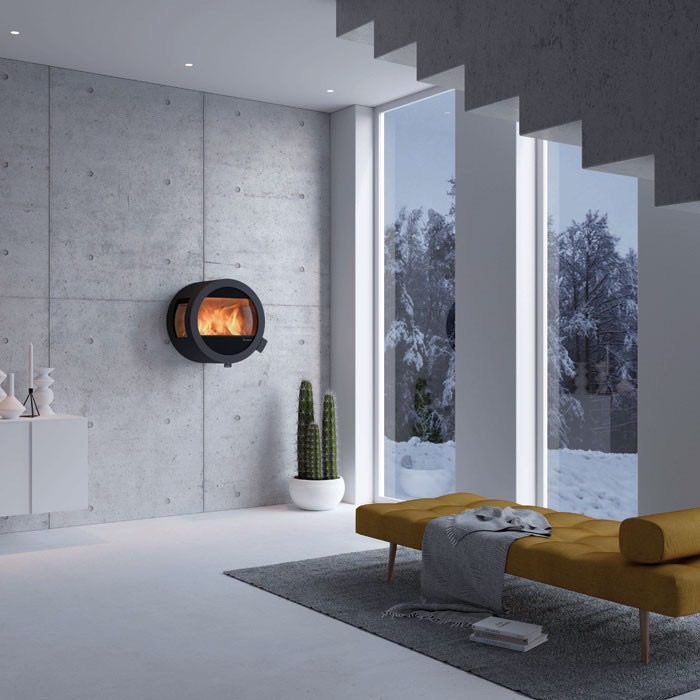
There is a style for every interior: minimalist steel cylinders, heritage cast-iron, corner units for tighter footprints and wall-hung models that free up floor space. Many are DEFRA-ready, which means log burners Scotland can be used in smoke-control areas when paired with suitable fuels and operated as intended.
Sizing: getting the heat output right
Sizing is pivotal. Oversizing causes overheating and sooting; undersizing leads to disappointment. A practical rule of thumb is roughly 1 kW per 14–20 m³ of room volume. This is only a starting point—insulation, airtightness, glazing and ceiling height all matter. For log burners Scotland, our survey process shortlists appliances that heat comfortably without wasting fuel.
Indicative heat output guide
| Room volume (m³) | Indicative output | Notes |
|---|---|---|
| 50–90 | 3–4 kW | Snugs and small lounges with decent insulation |
| 90–140 | 4–5 kW | Typical living rooms |
| 140–200 | 5–7 kW | Larger rooms or partial open-plan spaces |
| 200–280 | 7–9 kW | Bigger rooms, higher ceilings or draughtier buildings |
Style and configuration
Choose a look that works with your room: clean steel suits contemporary spaces; classic profiles complement period properties. Consider external air kits for airtight homes, integrated log stores for convenience, benches for zoning, and rotating fireboxes for open-plan layouts. You can compare examples on our stoves page.
Flues, liners and chimney cowls
The flue is the engine of the installation. In older homes with chimneys, a stainless liner sized to the appliance protects masonry and promotes clean combustion. Where there is no chimney, a twin-wall system allows a safe internal or external route. For exposed coastal or high-ground properties, the correct termination height and a suitable cowl reduce downdraft and stabilise draw. When researching hardware, many customers consult ChimneyCowls.uk as a reference before we specify the final solution during survey.
Installation, regulations and handover
Professional installation is essential for warranty, insurance and safety. In Scotland, the work must satisfy Building Regulations covering hearth construction, clearances to combustibles, ventilation, flue design and carbon monoxide alarms. For log burners Scotland, our team handles surveys, design details, safe installation and a documented handover so you know exactly how to run the appliance.
What we check at survey
- Room volume and heat-loss characteristics to confirm output
- Hearth size, thickness and materials
- Air supply solutions, particularly for airtight or renovated homes
- Feasible flue route, termination height and cowl selection
- Placement for CO alarms and user-friendly controls
Cutting corners on compliance can void insurance or require costly remedial work. Our wood stove services Scotland page explains how we schedule surveys, installations and certification to keep every step above board.
Costs: purchase, installation and running
Budget depends on the appliance, flue route, hearth work and any opening alterations. A typical small-to-medium stove with a liner may include:
- Appliance and accessories
- Liner or twin-wall components and terminals
- Hearth fabrication or upgrade
- Labour for installation, testing and commissioning
- CO alarms and certification documents
Running costs reflect log prices and how efficiently you operate the burner. Properly sized and used, log burners Scotland often displace a meaningful portion of gas or electric demand during colder months.
Fuel quality and clean ignition
Use seasoned hardwood under 20% moisture content, or buy kiln-dried logs for consistency. Store wood off the ground with airflow and rotate stock to keep moisture low. Damp fuel produces soot, smoke and creosote, reduces efficiency and blackens glass. For quick, low-smoke starts, many owners of log burners Scotland use Hot Box ® Firestarter to reach clean-burn temperature promptly.
Simple fuel checklist
- Hardwoods (ash, beech, oak) burn longer and steadier
- Split logs to speed seasoning and enable smaller ignition loads
- Use a moisture meter; aim for < 20% for log burners Scotland
- Keep stacks covered yet ventilated; avoid plastic tarps pressed onto wood
Efficiency tips for daily use
Good habits reduce fuel use and emissions. Open primary air fully at start-up, add small splits, and allow the firebox to reach operating temperature before throttling back. Refuel little and often with well-spaced logs; avoid over-loading. Clear excess ash but retain a thin bed if the appliance is designed for it. With these practices, log burners Scotland deliver consistent heat, cleaner glass and less soot.
Quick wins
- On very cold days, warm the flue first with a small kindling load
- Check door seals annually; tired rope gaskets leak air and waste heat
- Keep the airwash path clear to preserve the flame view
Servicing, safety and lifespan
Plan at least one sweep per year, or two for heavy use. Periodic checks of baffles, bricks and door seals extend appliance life. Always confirm CO alarm operation after maintenance. Our service team provides sweeping, diagnostics, seal replacements and refurbishments to keep log burners Scotland safe and efficient.
Annual service checklist
- Chimney sweep and (where useful) camera inspection
- Rope seals, glass condition and latch tension
- Baffle plate and firebrick wear
- Paintwork touch-ups and minor corrosion treatment
Common mistakes and how to avoid them
Three pitfalls recur across log burners Scotland projects. First, oversizing for aesthetics: the result is overheating and sooting. Second, poor fuel storage: damp logs ruin performance. Third, DIY flue changes without considering terminal height, clearances or cowls. All three are avoidable with a brief survey, a moisture meter and a sensible installation plan.
- Oversizing: let the room dictate output; use form factor and glazing for presence, not surplus kW.
- Fuel quality: buy kiln-dried hardwood or verify with a moisture meter before use.
- Flue planning: route, diameter and terminal matter as much as the stove; ask us to specify.
Environmental notes and cleaner burning
Cleaner operation is a combination of appliance choice, fuel quality and user technique. DEFRA-ready models restrict primary air at low settings to minimise smoke. Dry hardwood produces fewer particulates and more usable heat than wet softwood. By lighting efficiently and running the firebox at the correct temperature, owners of log burners Scotland can significantly cut visible smoke and reduce soot deposition in the flue.
Regional considerations across Scotland
Coastal properties face strong winds and salt exposure: robust terminals and sheltered routing help, and the termination height must be correct. Highland and rural homes may require taller stacks and careful siting to reduce turbulence around rooflines. In cities, DEFRA-ready models and suitable fuels ensure log burners Scotland remain compliant while delivering practical space heating.
FAQs
Do I need a chimney to install a burner?
No. Twin-wall flue systems allow safe installation where no masonry stack exists, with internal or external runs designed to suit the property.
Are log burners allowed in smoke-control areas?
Yes, when the appliance is DEFRA-ready and you use suitable fuels. We confirm options during survey and recommend compliant models for log burners Scotland.
How often should the chimney be swept?
At least annually for average use; twice yearly for heavy users. Regular sweeping maintains draw, reduces soot build-up and protects liners.
What’s the cleanest way to light the fire?
Use dry kindling and a reliable firelighter. Many owners choose Hot Box ® Firestarter for quick, low-smoke ignition on log burners Scotland.
When should I call for service?
If you notice smoke spillage, rapid glass blackening, unusual smells or weak draw. Our wood stove services Scotland cover diagnostics and maintenance.
Take the Next Step
Ready to explore models or arrange a professional survey? Our team installs and maintains log burners Scotland across Dundee, Perth, Angus, Fife and beyond.
